Image
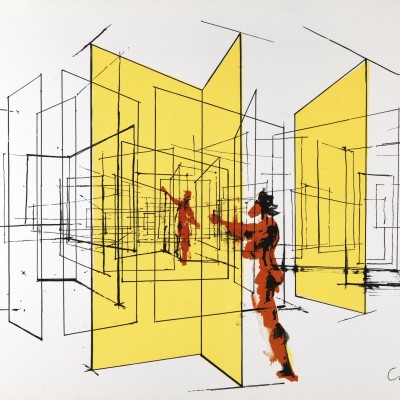
Description
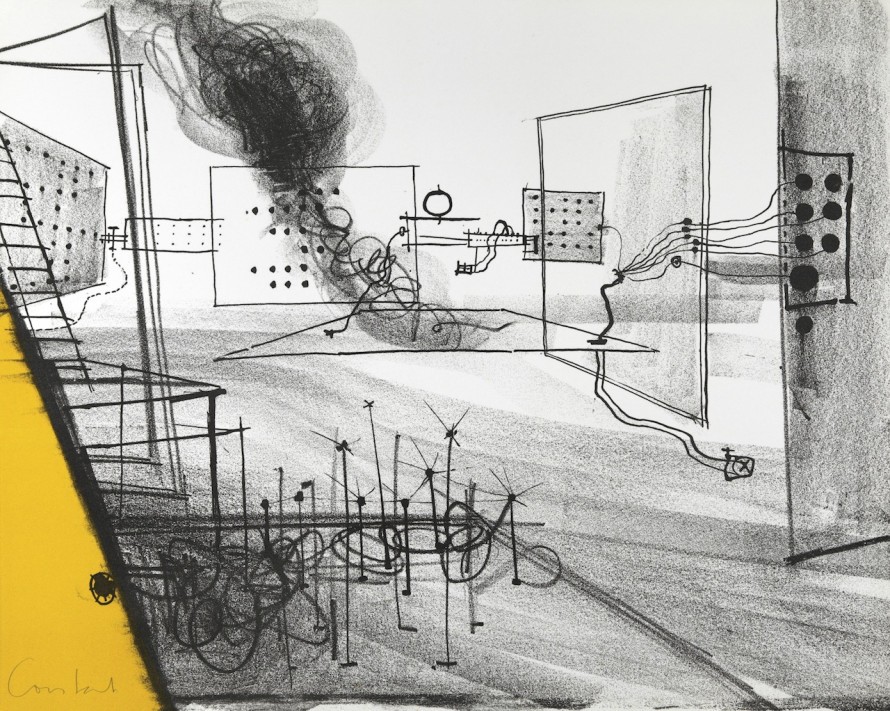
Labyrisme 01, 1968


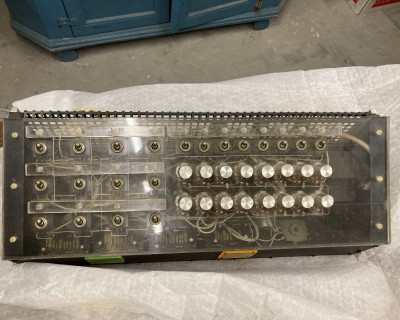
All four tracks on Tardis Musica have one thing in common: a sound generator built for a sculptural installation that was part of Constant
Nieuwenhuys’ New Babylon* project around 1968. It almost immediately caught fire and was dismissed by Constant.
The sculpture itself was destroyed, this ‘electronic controller’ which allowed the public to play with sound and light remained in storage.
Tardus Musica was released March 26, 2026.
Bankcamp Tardis Musica
The sculpture itself was destroyed, this ‘electronic controller’ which allowed the public to play with sound and light remained in storage. Fondation Constant lent us this controller to figure out what it was and what it could do — see: Constant101. First of all, it is an analogue electronic construction which has certain consequences due to the deterioration of its components over time. The sounds it generates, although simple tones, are unpredictable and unstable… of course, unsurprisingly, a love affair for B M B con. The slow movements caused by the heavy knobs gave our pieces a long duration. Things could only be changed very slowly, very unlike our previous work, analogue or digital. For us this was a new experience, we could step into the realm of colleagues like Roland Kayn ;-) Be warned, the pieces presented here have nothing to do with New Babylon or Constant for that matter. The composers, female and male who were Constant’s contemporaries could without any doubt, have created something for New Babylon, but they were never involved as far as we know. Also the sound generator is never mentioned in the New Babylon publications of the time. Apparently it played no role. Only Mark Wigley mentions it much later in the late 1990’s in a few lines in his book (2). B M B con. 2026 (1) New Babylon was an imaginary utopian city, developed by Constant through maquettes, sculptures, drawing, painting, lectures and soundtracks. It started in the late 1950’s in the context of the Situationist International and continued after his expulsion into the early 1970’s. As a project it was very influential in its own era, re-discovered every so often by new generations and also the English speaking people since the late 1980’s.