Image
Description
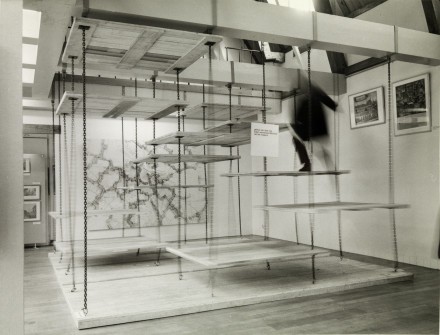
Ludieke trap at "Weg wezen: Recreatie vroeger, nu en straks"
What does an exhibition about fabric frenzy, a stair obsession, an architect posse, and humans jacked into tomorrow’s technological tool have in common?
You guessed it, they all exhibit works by Constant.
His art globe-trots from Amersfoort to NYC… catch the wanderlust if you can!
Kunsthal KAdE, Amersfoort, NL
31 January till 10 May, 2026
Both ladders and stairs are designed with a clear functional mission: to bridge physical heights. Their simple lines and geometric shapes contribute to their aesthetic appeal. They help us literally up and down, but also figuratively—through growth, change, and ambition. Sometimes we climb steadily, sometimes we stumble, and sometimes we feel the urge to find a way out.
But ladders are more than a tool or a metaphor for success; they tell the story of transformation, of the human journey between the earthly and the higher. They appear in myths and stories, such as Jacob’s heavenly ladder, which reflects the connection between man and the divine.
The social ladder shows how people strive for progress, sometimes facing obstacles, sometimes encountering opportunities. The escalation and de-escalation ladders show how small steps in the right or wrong direction can be decisive in relationships and conflicts. The escape ladder may indicate danger, but it also symbolizes hope and a new beginning.
Reason for the exhibition Stairway to..? is the monument The Ladder by Armando, the war memorial that stands near the entrance road to Amersfoort-South.


New Museum, NYC, USA
21 March till 21 August, 2026
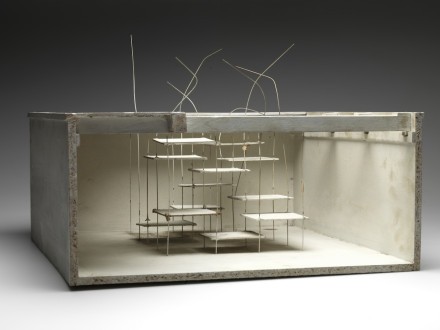
The exhibition New Humans explores how technological developments have inspired evolving definitions of the “human.”
New Humans: Memories of the Future will inaugurate the New Museum’s expanded building with an exploration of artists’ enduring preoccupation with what it means to be humanin the face of sweeping technological changes. New Humans will trace a diagonal history of the twentieth and twenty-first centuries through the work of more than 150 international artists, writers, scientists, architects, and filmmakers, highlighting key moments when dramatic technological and social changes spurred new conceptions of humanity and new visions for its possible futures.
New Humans illuminates artists’ evolving visions of the future. The exhibition surveys the myriad shapes that humanity might take, from robots and cyborgs to haunting, seemingly alien life forms, and moves beyond the field of art by bringing together utopian architects, sci-fi filmmakers, and eccentric writers who imagine physical, virtual, and even post-human worlds. In an age when technological advancements and their unintended consequences seem to be accelerating at uncontrollable rates, New Humans proposes art as a collective form of creative prognostication—a vital self-portrait of the humans we may become.



Atelier Volten, Amsterdam, NL
11 April till 08 November, 2026
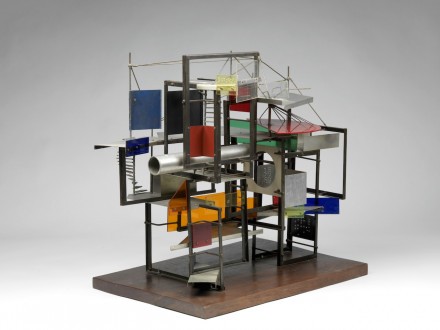
On April 11, Atelier Volten opens the very first exhibition dedicated to the postwar collective Liga Nieuw Beelden (1955–1969). Despite its well-known members such as Wim Crouwel, Aldo van Eyck, Frieda Hunziker, Kho Liang Ie, Constant Nieuwenhuys, Shinkichi Tajiri, André Volten, and Ans Wortel, the Liga has remained largely unknown until now.
Through collaborations between architects, artists, designers, and industrial designers, Liga Nieuw Beelden sought to make the city more beautiful and more human. Their chosen means was the merging of different artistic disciplines. After the Second World War, the Liga built on the ideals of De Stijl and the Bauhaus, whom they considered their avant-garde predecessors.

Museum Cobra, Amstelveen, NL
24 April till 06 September, 2026
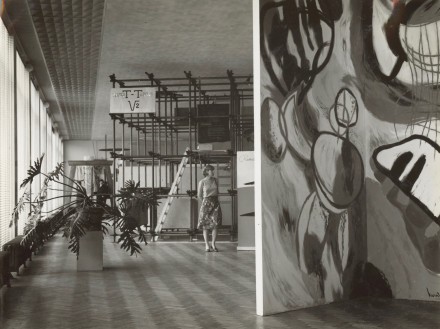
Wilde rokken. Cobra art as textile presents textiles designed by members of the Cobra movement and produced through commissions with Dutch textile printers. In the post-war years, manufacturers invited artists to translate avant-garde painting into repeatable designs for garments and domestic textiles, positioning these collaborations as demonstrations of new printing methods and emerging textile technologies.
The results initially provoked public backlash, with newspapers mocking manufacturers for aspiring to “art” and criticising artists for misunderstanding the technical constraints of textile design. Over time, as production expertise and visual languages aligned, the same designs shifted from scandal to desire, becoming widely embraced.
Set against the post-war decades and into the 1960s, the exhibition also situates these textiles within a changing social landscape, including women’s growing agency over the body and the statements


